
Academic Pursuit
The Village fool Goes to School
It was a struggle for Professor Adei to be sent to school. His father preferred he was deployed on the farm—a decision Prof. Adei says was “quite strange.” “Why me?” he asks rhetorically during the thought-stimulating interview that ushered us into reflections on the life’s journey of a colossus.
The Professor who did not attend secondary school
It was a struggle for Professor Adei to be sent to school. His father preferred he was deployed on the farm—a decision Prof. Adei says was “quite strange.” “Why me?” he asks rhetorically during the thought-stimulating interview that ushered us into reflections on the life’s journey of a colossus.
At the threat of divorce by his mother, his father unwillingly enrolled him in school. Being in a polygamous family everyone was protective and desired the progress of their children. His mother seeing the power of education was not ready to cower to her husband’s wishes.
During that period of tension, she took him to her hometown three miles away for a while where he started primary school to the great displeasure of his father. Reluctantly, Kwaku Adei succumbed and agreed to allow Prof. Adei to begin at the Hwiremoase Methodist School, aged seven, where he topped his class every term, bar one, until the tenth grade.
His father, still seething over how young Stephen had been enrolled did not care much for his education, and he showed this by providing the barest minimum of support. “Ironically, even at a tender age in primary six, he called me whenever he received a letter so I could read it for him since I could read quite well by then. A real contradiction…he will not show much concern for my schooling but will want to reap the benefits of my education,” Professor Adei wonders.
According to Prof. Adei, he had an awkward relationship with many adults growing up. An instance where he was scolded for smacking his younger brother for the ‘capital crime’ of sticking his tongue out at him left him with the conclusion that the average adult was a ‘fool’ for judging children according to adult standards. As a result, he would not argue with any adult.
Consequently, he ended up being nicknamed ‘the fool’, a tag he bore until returning to the village aged 25, with a master’s degree and a car. His academic prowess, however, endeared him to one class of adults – his teachers, and this gave him unhindered access to their books.
As early as primary six, Prof. Adei harboured the desire to go the university and the only route to that he knew at that time, was through secondary school. So, from grade eight he sat for the common entrance examination which he passed and kept on passing through to grade 10, securing admissions into Prempeh College, Mfantsipim, and Aggrey Memorial School in consecutive years.
However, he was unable to enroll in any of the schools and for the first time, he realized his family was poor. The 16-year-old Stephen Adei was becoming frustrated because “I thought that was the only route by which I could get into the university.”
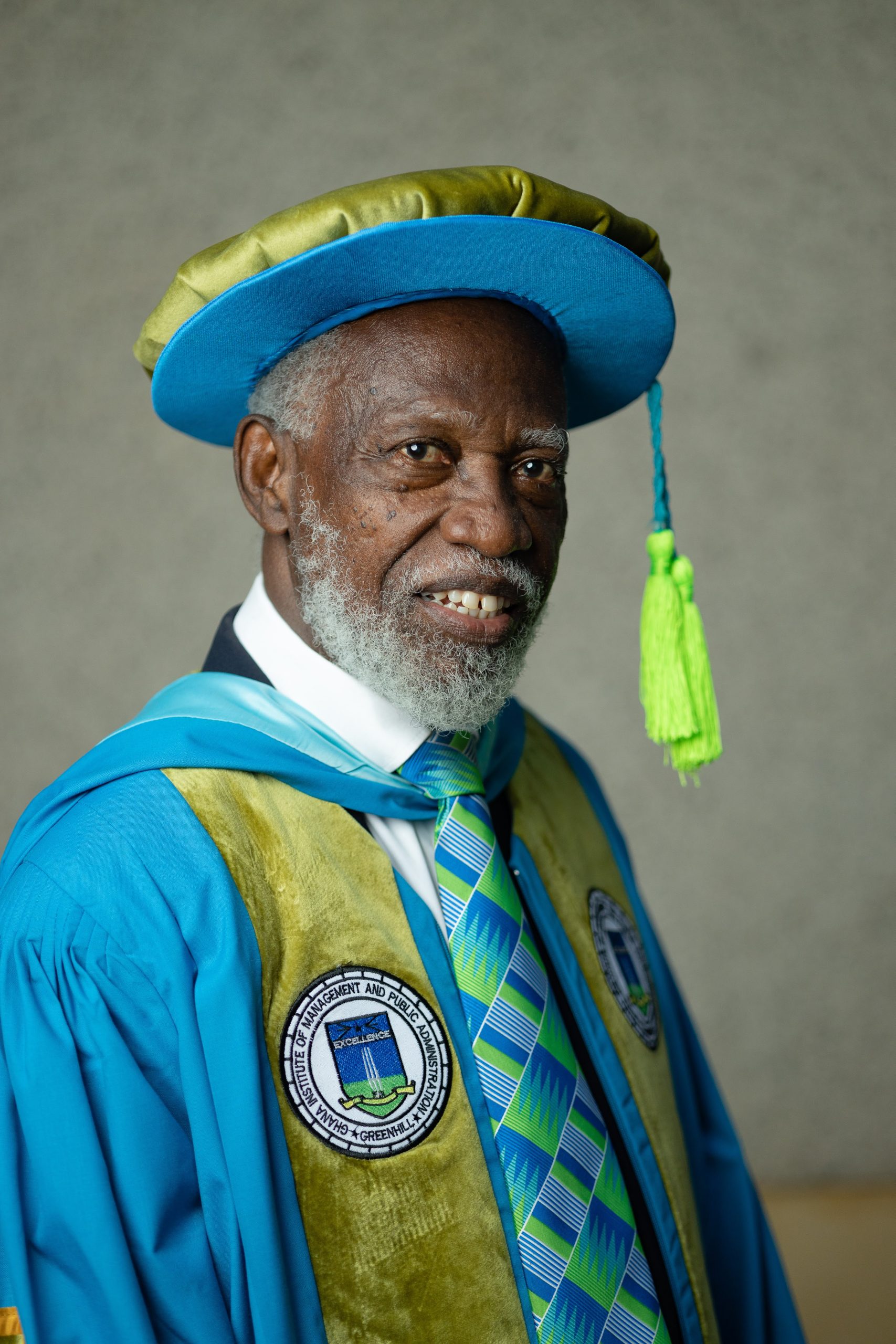
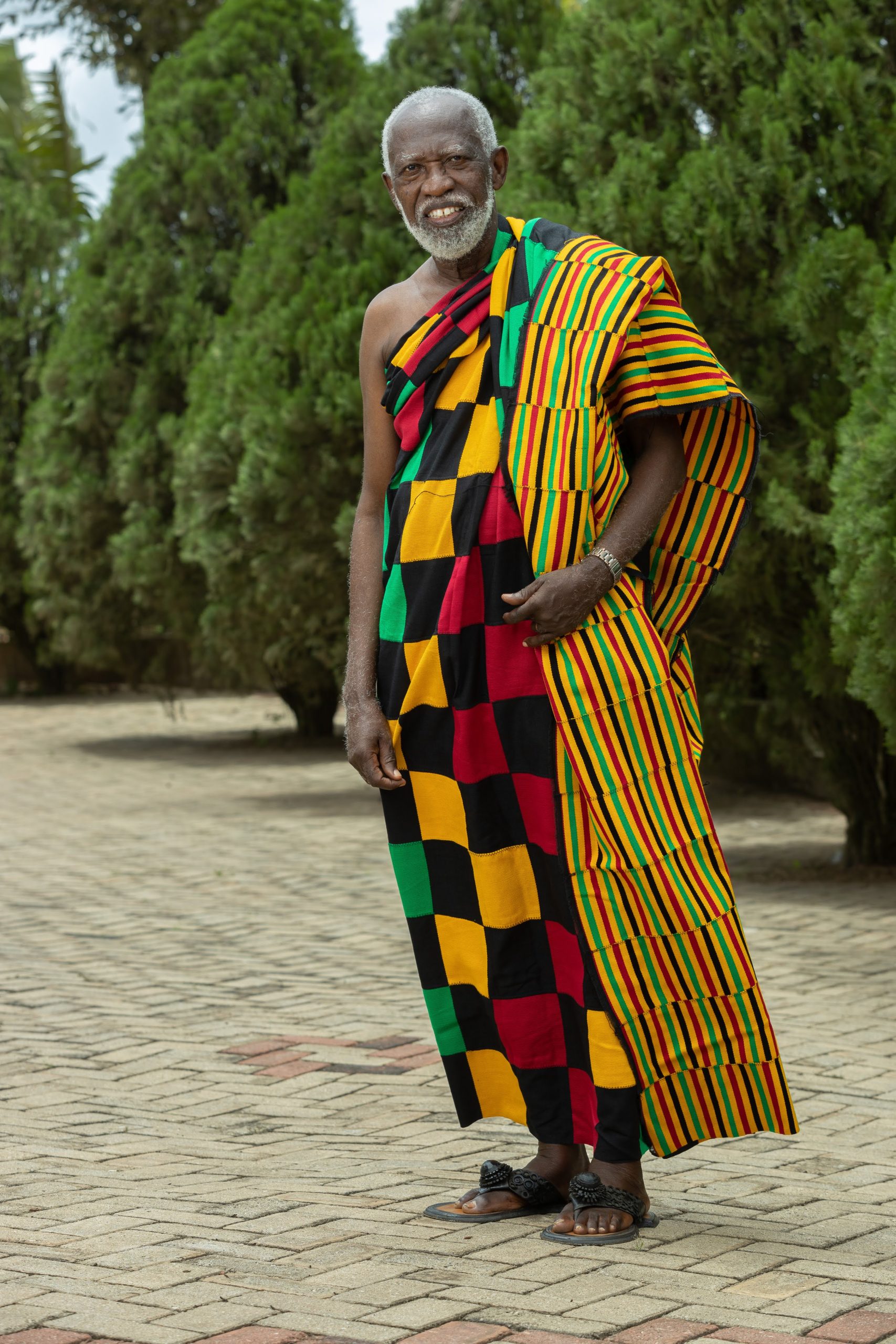
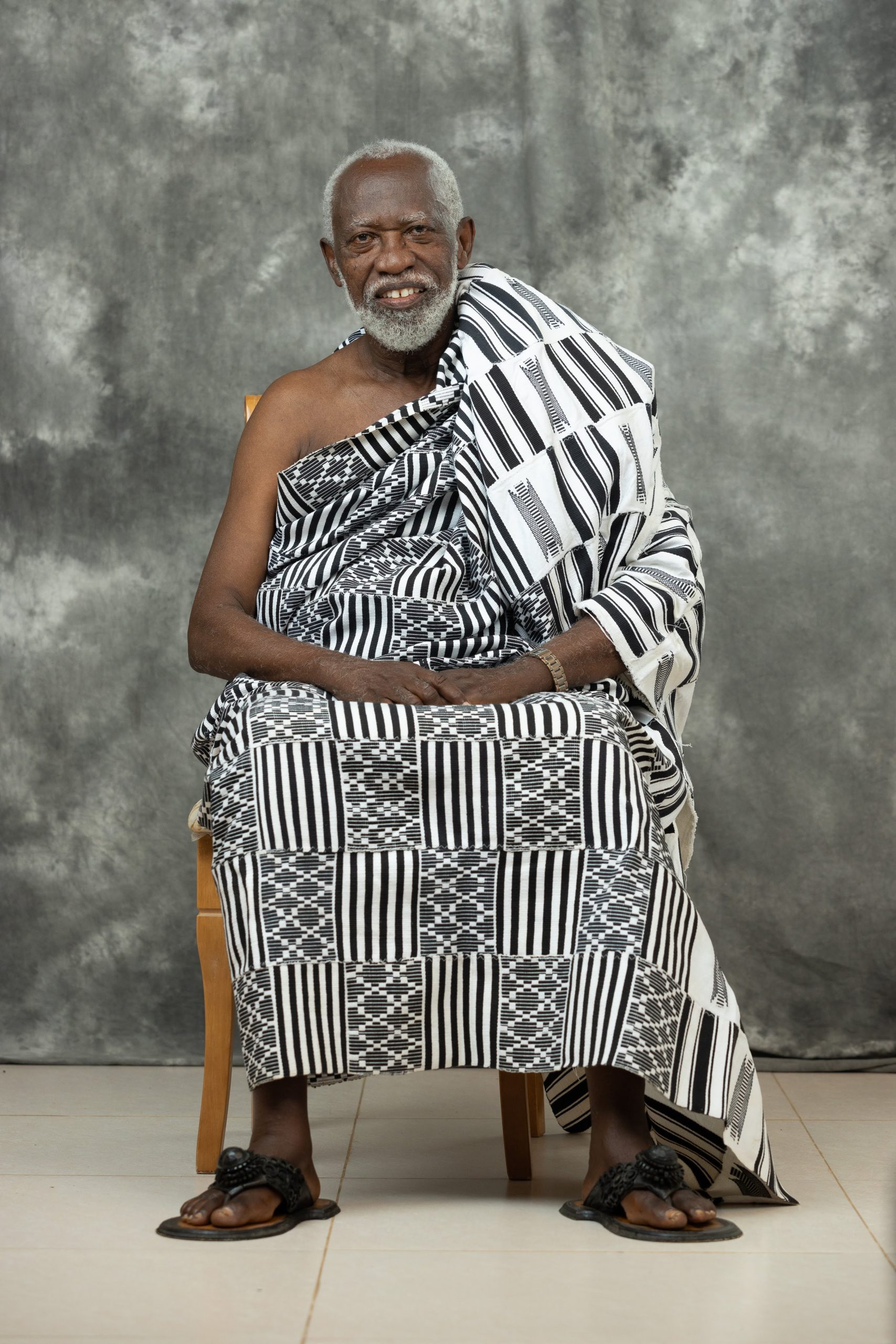
The Professor who did not go to secondary school
The counsel and encouragement of one of his teachers at the Brofoyedru Middle School – Mr Amoah – brought some light to those dark times and changed the course of Stephen’s life. A pile of frustration at that point, Prof. Adei’s spirit was lifted, having been weighed down by witnessing his mates proceed to secondary school and he could not because of lack of funding.
“I was so disturbed and I wanted to know what to do since my chances of going to university seemed doomed forever. Mr. Amoah then encouraged me and told me that there was another way. He said I could write the O and A-Level examinations by studying via correspondence programmes. I simply had to study on my own and write the exams…that brightened me up and I think that was one of the best pieces of advice I had ever received regarding education,” Prof. Adei says emphatically. This was the start of a lifelong relationship with Teacher Amoah that when he died, Prof. Adei was listed as one of the chief mourners.
Life At The University Of Ghana, Legon
In 1968, Prof. Adei fulfilled what was then a lifelong dream as he arrived for his university education at the nation’s premier university – Legon. This was facilitated by a scholarship from Gilksten West African Limited, which had a big sawmill at Asanwinso near Sefwi-Wiawso. The three awardees appeared in the national newspaper as a result – something the Hwireamose village boy never expected.
The young man from Hwiremoase did not even know where Legon was when he boarded a state transport from Kumasi. He was worried he would get lost when he arrived in Accra, he confesses.
“The Nsawam road was being made so, the state transport from Kumasi to Accra passed through Koforidua and lo and behold when we were getting to Legon…they said ‘yes’, University of Ghana, who are those getting down and I said praise the Lord,” he recalls.
He climbed off the bus in front of the gate of Legon with a pair of trousers that was gifted to him, two shirts, a piece of cloth, his Bible, and a pen. “I didn’t have shoes but only ‘chale wote’. That’s all.”
None of his classmates from his days at Brofoyedru Middle School or Sefwi- Wiawso Training College was there and that made him feel forlorn. But, God being so good, he was allocated the Legon Hall, room 206, in the Annex B block. “I think my batch was the first to use that building,” says Professor Adei. During those days, two people shared a room at the Annexes. The rooms were very spacious, airy, had two small beds, and were very comfortable. And guess what, I had the Joseph Atta Ntiamoah, a strong born-again Christian from Prempeh College as my roommate. …”and that solved my loneliness problem very quickly because with that I went to the Christian fellowship,” he adds.
The programmes the University admitted him to undertake were Religious Studies, Economics and Geography. When he went to the Religious Studies class, he realised that many of the so-called theologians teaching there were non-believers — some, he says, were teaching what he considered heresy.
Some of the teachers, according to him, even ridiculed the born-again experience, salvation and other core Christian beliefs and practices. And there, he was, a born-again Christian with an authentic experience of redemption through faith in the death and resurrection of Jesus Christ. “I said if these people are going to teach me Christianity and examine me, I would not do it,” Prof. Adei recalls.
The necessity of the times it is said more than ever, calls for one’s utmost alertness, deliberation, fortitude and perseverance. The young Stephen Adei, thus, went to see one Prof. Abraham, who was the Head of the Department of Sociology. He informed the HOD that he wished to study Sociology instead of Religion. Professor Abraham agreed and gave the 19-year-old a chance since there was space. He took along a note the former gave him to the Registrar’s office and joined the sociology class. He did not abandon his desire to study theology, though.
Later in his life, he went to study for his Bachelor of Divinity degree at London University and Masters in the University of South Africa when he worked in London and Windhoek respectively.

An Educator
Professor Stephen Adei is a distinguished educator known for his significant contributions to higher education in Ghana. Prof. Adei is also known for his commitment to educational excellence, focusing on developing leadership and management skills.
An Economist
With a deep understanding of economics, he has provided valuable insights into the country’s economic challenges and opportunities. Prof. Adei has served in various advisory roles, offering his expertise to both government and private sector institutions.
A Life-Defining Moment At Sefwi-Wiawso Training College
When he got the opportunity to enter post-middle school at the Sefwi-Wiawso Training College, Prof. Adei resolved to put Teacher Amoah’s advice to good use.
As such, one of the first things he did after enrolling at the College was to register for a self-study correspondence course at the Rapid Results College after receiving his first allowance, which was 10 cedis at the time. Within two and a half years, he had attained his General Certificate of Education (GCE) O Level, passing four subjects namely Ancient History, Geography, Mathematics and Religion. He, unfortunately, failed in English Language.
However, the word got around real quickly that Stephen, who was starting the third year, had passed four subjects, a feat in their area.
A firm believer that difficulties vanish when faced boldly, Kwabena Obiri Adei was emboldened to register for A-Levels, choosing Mathematics, Geography, Economics plus A-Level in English. He passed three years after middle school and was, therefore, on his way to the university.
“I ended up in university even before all my middle school classmates who went to secondary school. Mr. Amoah’s advice put me so much ahead that when I completed my Masters’ degree and came back to teach at the University of Ghana as a part-time lecturer, some of my classmates in middle school were still undergraduate students,” he states.
He reminisces over this period at Wiawso with much fondness, as it was the time the tall, lanky, somewhat socially-awkward lad came, by grace, to faith in Christ and received his salvation by grace.
“There – Sefwi-Wiawso – I made some very good friends, and I became a born-again Christian in the second year at the training college. So, I have a soft heart for Sefwi-Wiawso. It is almost like home to me. Though I grew up as a normal child going to church that is where I trusted Jesus Christ as my Lord and personal Saviour…through joining the Scripture Union, I understood the gospel that you have to repent of your sins and put your trust in Jesus Christ. It was a decisive moment even though was never the rowdy type.
Even though, he worked most of his life as an Economist — heading the Ghana Investment Promotion Centre’s Research department and later as an advisor to the Commonwealth Secretariat and the United Nations Development Programme (UNDP), Prof. Adei initially struggled with his studies during his first degree. He recalls scoring 32 percent and 40 percent in his first and second tests in Sociology for example.
“I was fortunate none of those scores mattered in the then prevailing system whereby only one examination at the end of the year (First University Examination) counted. Geography came naturally for me probably due to my upbringing in a village farm setting,” he states.
His difficulty with Economics and Sociology, he says, was not a result of a lack of capacity to comprehend but due the autodidactic nature of his O Level and A-Level preparations.
He had studied only to pass his exams as a private student. He did not have the breadth of knowledge that would have made it easier for him to understand the subject at College.
“Sociology was new to me. By the second term I was making good progress in Economics but not so well in sociology and heading towards failure. The First University Exam meant one thing and one thing only. I would have to go back home to the village. I worked as hard as I could and trusted God totally with no anxiety,” he says, and God blessed his diligence.
His Sociology book got missing a few weeks before the final exams. “I went to a very clever classmate, Issa Chambah and copied all of his notes for the whole year. Surprisingly, before the exams that also went missing again. So, I had to write it all over again. The third got missing for a few days when I inadvertently left it in an economics class before I found it,” he recalls.
That tedious process of writing and rewriting the notes made him know everything in the notes by heart and the result was that he moved from a total failure to an honours student in Sociology.
Eventually, he had honours in Geography, Sociology and Economics making him one of the topmost students of his year with what was called ‘Triple Honors’. He then majored in Economics —a discipline he grew to love, following persuasions from his brother. He was one of the top students in his class with Second Upper-Class degrees.
“In our time, the Economics Department had an unwritten policy to give one first-class honour in 10 years. And, unfortunately, before us, Dr Gobind Nankani had been given First Class. So, in my class of 28, eight got Second Upper-Class. And, if I tell you what has become of all the eight, you would see that they were super first-class materials,” he says.
“I am referring to colleagues such as Emmanuel Akpah, and Issah Chambah. Per these rules, we were all lumped together as Second Upper students. But, for me getting that grade from Hwiremoase via Wiawso seven years after leaving middle school was more than enough,” Prof. Adei adds.
Prof. Adei’s time as an undergraduate was a period of “greatest spiritual growth” for him. “My degree was only a toping of the ice. More important was learning to have a closer fellowship with Jesus and meeting the best woman God made to be my wife later.”
At age 23 a brave new world was opened to him.
Upon the completion of his first degree, in 1971, Prof. Adei had four job offers – an Assistant Manager at Barclays Bank, an Assistant Economist at Bank of Ghana, Assistant Economist at the Ministry of Finance and an Evaluation Officer at the Capital Investment Board (CIB), now Ghana Investment Promotion Centre (GIPC) and an opportunity of a scholarship to pursue his Masters.